Most people who visit Gatlinburg and Pigeon Forge don't fly into Gatlinburg — there's no airport there. They land at McGhee Tyson (TYS) in Knoxville, or they drive into Knoxville first, and the last 35 miles are on them. That leg is where trips get expensive, and it's the leg we're built for.
Cruise Knoxville Car Rentals is a locally owned host based in Knoxville. You book a specific car online, we hand it off near the airport or wherever suits you, and you drive it into the Smokies the same afternoon. No counter, no concession fees, no shuttle to an off-site lot.
- Knoxville → Pigeon Forge
- About 33–35 miles · roughly 45–55 minutes
- McGhee Tyson (TYS) → Pigeon Forge
- About 47 miles
- Pigeon Forge → Gatlinburg
- About 6 miles on the Spur · 15 minutes, more in season
- Usual route
- I-40 east from Knoxville, then State Route 66 south into Sevierville and the Parkway
Do you actually need a car in Gatlinburg and Pigeon Forge?
Here's the honest version, because it isn't a simple yes.
Both towns have trolley systems, and they're good ones. Gatlinburg's trolleys cover the Parkway and over a hundred stops. Pigeon Forge's Fun Time Trolley runs to Dollywood, the Old Mill and the outlets, with fares in the one-to-three-dollar range and a nonstop connector to the Gatlinburg Welcome Center. If your entire trip is a Parkway hotel, mini golf, pancakes and one show, you can survive without a car.
But that's not why people come to the Smokies. The trolleys don't go where the mountains are. Cades Cove, Newfound Gap Road, Clingmans Dome, Roaring Fork, the Foothills Parkway — none of that is on a trolley route. If you plan to spend a single day inside Great Smoky Mountains National Park, you need a vehicle, and rideshare coverage thins out fast the moment you leave the Parkway.
The other thing a car buys you is where you can stay. Cabin rentals up in the hills are the best value in the area and they're essentially unreachable without one — those switchback driveways aren't a rideshare's idea of a good time at 11pm.
💡 Rule of thumb: Parkway-only trip, two nights, no park plans — you can skip the car. Anything involving the national park, a cabin, or more than two days — rent one. It usually costs less than the rideshare bill you'd rack up otherwise.
Which car should you take into the Smokies?
The question we get most is whether you need an SUV or four-wheel drive. From roughly April through October, for the paved roads nearly everyone drives: no. Newfound Gap Road, the Cades Cove Loop and the Spur are all paved, maintained, and perfectly comfortable in a sedan. What actually matters up there is fuel economy, a car that's happy on long grades, and — if there are more than four of you — enough seats. That last one is why we added a 7-seat Kia Telluride to the fleet.
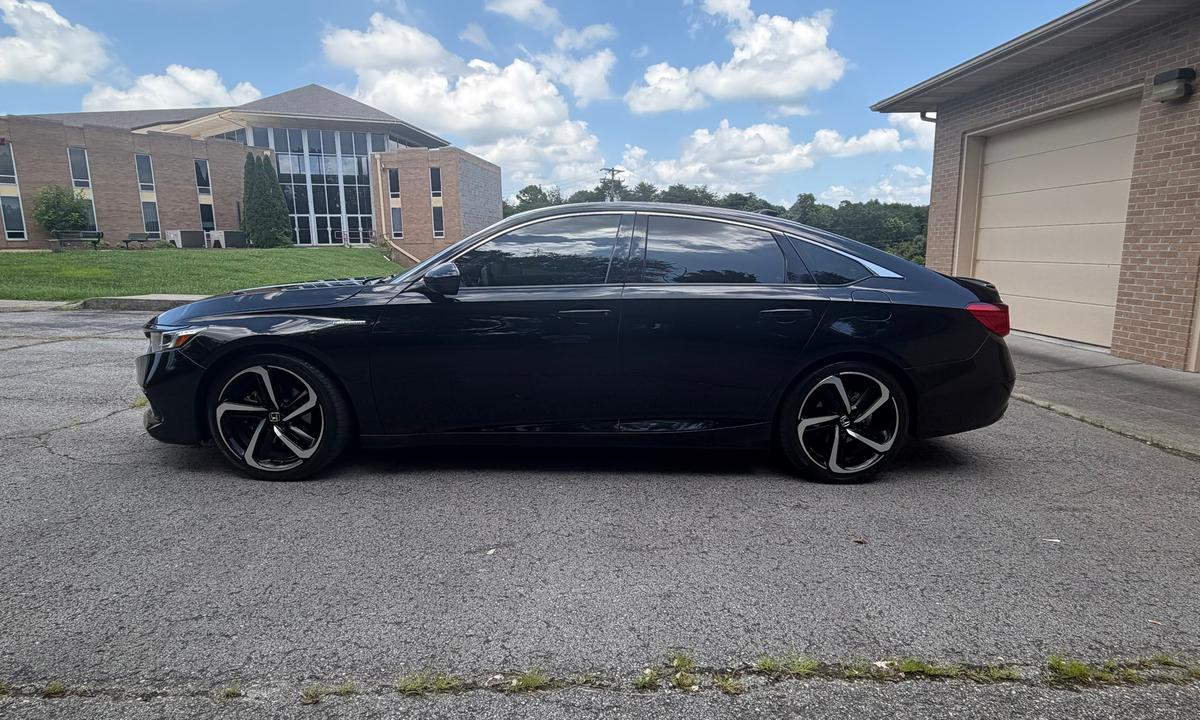
- 2022 Honda Accord Hybrid — our most-booked car for exactly this trip. It's the one that makes financial sense when your week involves several trips over the mountain. The hybrid system does its best work on the constant up-and-down of Newfound Gap, and the fuel bill on a Smokies week lands noticeably below what a comparable SUV would cost you.
- 2018 Kia Soul — small, easy to park, and the Parkway in July is a place where being easy to park is worth real money.
- 2020 Kia Telluride — our 7-seat SUV rental, three rows and real luggage space. This is the one when there are five, six or seven of you and a second car is the only alternative.
- 2019 Ford F-150 — for groups hauling gear, bikes, coolers or a week's worth of cabin supplies.
We go deeper on this in the best car for a Smoky Mountains trip, including the winter caveat — because December through March genuinely is a different conversation, and Newfound Gap Road closes for snow more often than visitors expect.
Three things that will save you money and time in the park
1. You need a parking tag
Great Smoky Mountains National Park has no entrance fee, which surprises people, but since 2023 any vehicle parked longer than 15 minutes inside the park needs a parking tag. It's $5 a day, $15 a week or $40 a year. Buy it in advance on recreation.gov and print it — most trailheads have no machine, and discovering that at the Alum Cave lot with a hike planned is a bad start to a morning.
2. Cades Cove is closed to cars on Wednesdays in season
Through 2026, the Cades Cove Loop Road is vehicle-free all day every Wednesday from May 6 through September 30. It's wonderful if you brought bikes and a wasted drive if you didn't know. The loop is 11 miles, one-way, one lane, and in October a full circuit can take three hours in traffic — go at first light or don't go at all.
3. Parking on the Parkway is the real cost
Gatlinburg parking runs meters and paid lots, and in peak season the good ones fill by mid-morning. Pigeon Forge is easier — and Patriot Park offers free parking with trolley access, which makes a decent strategy: drive in, park once, trolley the strip, then take your car back out to the mountains the next morning.
How the booking works
All of our cars are booked direct on this site. You rent on your own auto insurance, so there is no protection plan sold at a counter — check with your insurer that your policy covers a rented vehicle before you book. The full walkthrough lives on how it works, but the short version is three steps: pick your dates, sign the rental agreement, meet us for the handoff.
Flying in? We can stage the car near McGhee Tyson Airport so it's ready when you land, which turns the TYS-to-cabin leg into one drive instead of a shuttle, a counter and a queue.
When to book
Smokies demand is sharply seasonal and it isn't subtle. June through early August, all of October, and the Christmas-lights stretch from mid-November are when everything — cabins, cars, Dollywood parking — is tightest. October in particular sells out early; leaf season in the Smokies draws a genuine crowd. Book those weeks well ahead. A February weekday, by contrast, you can nearly walk up.
Common questions
Do I need a car in Gatlinburg and Pigeon Forge?
For a Parkway-only trip you can manage with the trolleys — Gatlinburg's system covers over a hundred stops and Pigeon Forge's Fun Time Trolley reaches Dollywood, the Old Mill and the outlets. But the trolleys do not go into Great Smoky Mountains National Park. If your plans include Cades Cove, Newfound Gap Road, Clingmans Dome or a cabin up in the hills, you need a vehicle.
How far is Gatlinburg from Knoxville?
Pigeon Forge is about 33 to 35 miles southeast of Knoxville, roughly 45 to 55 minutes, and Gatlinburg is another six miles on past it via the Spur. From McGhee Tyson Airport (TYS) it's about 47 miles to Pigeon Forge. The usual route is I-40 east out of Knoxville, then State Route 66 south through Sevierville.
Do I need an SUV or 4x4 for the Smoky Mountains?
From spring through fall, no. Newfound Gap Road, the Cades Cove Loop and the Spur are all paved and well maintained, and a sedan handles them comfortably. Winter is a different conversation — Newfound Gap Road closes for snow more often than visitors expect. What matters more than drive type most of the year is fuel economy, because Smokies weeks involve a lot of miles.
Is there an entrance fee for Great Smoky Mountains National Park?
There's no entrance fee, but any vehicle parked in the park for longer than 15 minutes needs a parking tag: $5 daily, $15 weekly or $40 annually. Buy it in advance on recreation.gov and print it — most trailheads have no machine on site.
Can I drive the rental car into the national park?
Yes, and no surcharge applies. The park is the whole reason most of our guests rent from us. You'll just need the parking tag above if you're stopping anywhere for more than 15 minutes.
Can you deliver the car so I can drive straight to my cabin?
Yes. We can arrange delivery near McGhee Tyson Airport or elsewhere in the Knoxville area so you go from landing to driving without a counter or a shuttle. Message us with your flight details when you book and we'll have it staged.
When should I book for a Smokies trip?
As early as you can for June through early August, all of October, and the Christmas-lights season from mid-November. Those weeks book out. A weekday in late winter or early spring is far more flexible.